Dancehall 101 · Lesson 6 of 9
Street Culture
Dancehall as community-level culture, rooted in Kingston's neighborhoods and informal economy.
Dancehall did not emerge from studios and record labels first — it emerged from streets, yards, and neighborhood dances in Kingston's working-class communities, particularly areas like Trench Town and the garrison communities that shaped so much of Jamaican popular culture. The music, dance, and fashion all developed close to the ground, in spaces controlled by the community itself rather than by formal cultural institutions.
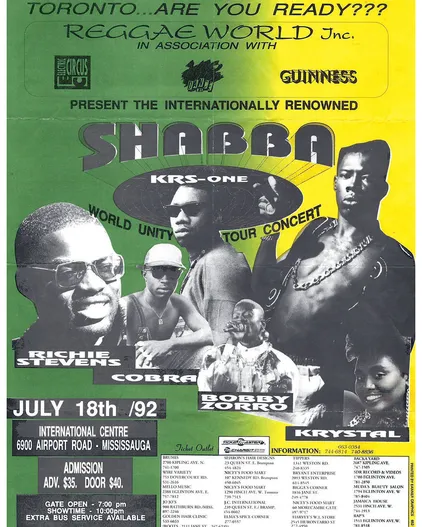
This street-level origin shaped an entire informal economy around dancehall: promoters organizing dances, vendors selling food and goods outside venues, flyer printers and distributors, and sound system crews who built and maintained their own equipment. For many communities, dancehall dances have functioned as both entertainment and a form of local economic activity and social gathering, especially in periods when formal opportunities were scarce.
Because of this grounding, dancehall has always carried the perspective, slang, and concerns of the communities that built it — including candid depictions of daily struggle, aspiration, and survival that some critics label "slackness" and others read as unfiltered social realism. Understanding dancehall as street culture, rather than purely as a music genre, is essential to understanding why it resonates the way it does.
Go deeper in the Journal
Related artists
Angie Angel
Jamaican female deejay (toaster) active from the late 1980s onward, best known for her platinum UK jungle remix of "Agony" and for blending a hard-edged dancehall delivery with Rastafari-influenced conscious lyrics.
Bob Marley
The defining figure of reggae music and a global icon of Rastafari culture, Pan-Africanism, and social-justice songwriting, best known as frontman of Bob Marley and the Wailers.
Buju Banton
One of dancehall and reggae's most influential deejays, whose 1995 album "'Til Shiloh" is widely credited with helping steer 1990s dancehall toward a more conscious, Rastafari-rooted sound; a Grammy winner whose career has also been marked by the internationally condemned song "Boom Bye Bye" and a 2011 US drug-trafficking conviction.
Capleton
Jamaican reggae/dancehall deejay known as "The Fireman," "King Shango," and "The Prophet" — a leading figure, alongside Buju Banton and Sizzla, in dancehall's 1990s turn back toward Rastafari-rooted, socially conscious lyrics.
Next lesson