2026-04-02
From the Archive: The Visual Language of Dancehall Flyers
Long before social media posts, event pages, or digital campaigns, dancehall moved through paper, walls, corners, lampposts, handbills, and street circulation.
Curated by YardRock TV · Researched by The Reggae Institute
A Dancehall Museum Archive Feature
Long before social media posts, event pages, or digital campaigns, dancehall moved through paper, walls, corners, lampposts, handbills, and street circulation.
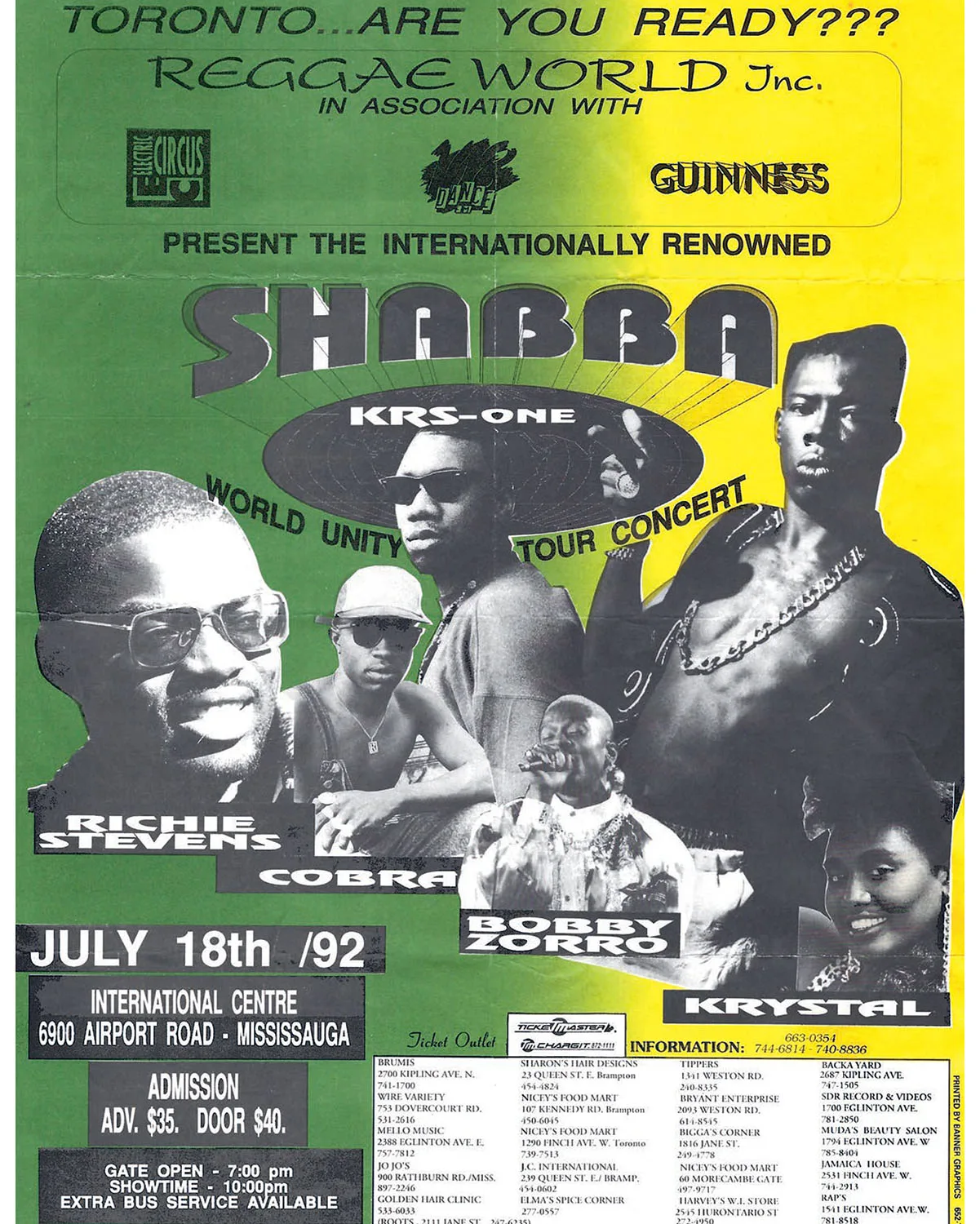
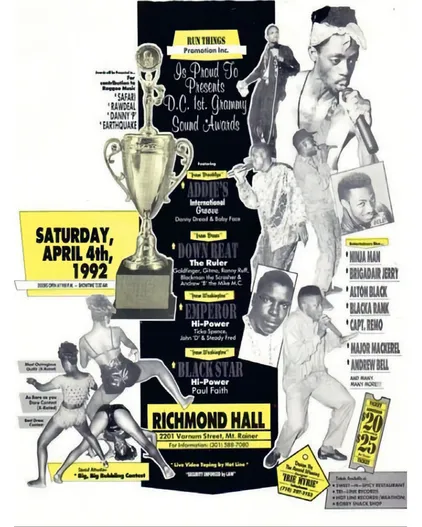
Among the most important visual records of dancehall culture are its flyers — the printed announcements, posters, handbills, and graphic promotions that documented dances, clashes, performances, parties, and cultural gatherings across Jamaica and the diaspora.
Often produced quickly and designed for immediate public impact, dancehall flyers were never merely disposable advertisements. They were visual declarations. They announced where the culture would happen, who would be there, what sound would dominate the night, and what kind of energy the event promised.
Today, these flyers stand as some of the most revealing artifacts in the visual history of dancehall.
They preserve not only events, but a whole world of:
Dancehall flyers are not just promotion. They are archive.
And they belong in the museum.
Why Dancehall Flyers Matter
In many music cultures, promotional materials are treated as temporary ephemera — useful in the moment, then forgotten. But in dancehall, flyers have extraordinary historical value.
They help document:
In this way, dancehall flyers function as a visual map of the culture.
They show us not only what was happening, but how dancehall wanted to be seen.
This is crucial because dancehall has always been as much a visual and social culture as it is a musical one.
The flyer was one of the first places that culture took visual form.
The Flyer as Public Announcement
Before digital platforms transformed promotion, the flyer was one of the most powerful tools in dancehall’s public life.
Flyers were posted, handed out, shared, pasted, stacked, and circulated through:
A flyer had one job: to make the event impossible to ignore.
To do this, it needed to communicate quickly and powerfully:
But dancehall flyers often did more than communicate logistics. They also conveyed attitude.
They signaled whether the event would be:
This made the flyer a form of cultural performance in print.
Graphic Urgency and Street Visibility
One of the defining qualities of dancehall flyers is their graphic urgency.
They were designed not for quiet contemplation, but for impact.
A dancehall flyer often needed to grab attention instantly — from a wall, a pole, a shop window, or someone’s hand. This shaped a visual language built around immediacy and high visibility.
Common design features across many dancehall flyer traditions have included:
This visual intensity was not accidental. It reflected the social and competitive energy of dancehall itself.
The flyer had to do in paper what the sound system would later do in audio:
command attention
Typography as Performance
One of the most fascinating aspects of dancehall flyers is the role of typography.
Text on these flyers often functions not simply as information, but as visual performance.
Lettering can communicate:
Certain words are often given heightened visual weight:
This is important because it reveals how the flyer operates as more than a neutral design object. It stages anticipation.
The typography is often trying to create a feeling before the event even happens.
In this sense, the flyer is not only promotional. It is performative.
The Visual Politics of Hype
Dancehall flyers are deeply tied to the culture of hype.
In dancehall, hype is not trivial. It is social energy.
It is the atmosphere built before the event — the expectation, the rumor, the competition, the desire to be there when something major happens. Flyers played a key role in generating this emotional and cultural charge.
A flyer could suggest that an event would be:
This is one reason dancehall flyers often feel larger than life.
They do not simply say “come to this event.” They often imply:
you cannot afford to miss this moment
This logic remains central to dancehall culture even today, but in flyer form it becomes especially visible as a graphic strategy.
Sound Systems, Clashes, and Competitive Design
Some of the most compelling dancehall flyers are those connected to sound system culture and clashes.
These flyers often carry an especially charged visual language because they are promoting not just an event, but a confrontation.
A sound clash flyer may visually emphasize:
These flyers often operate like posters for a championship match, but through the aesthetics of Jamaican nightlife and musical culture.
This is significant because it reveals how dancehall promotion borrowed from and contributed to broader traditions of:
The clash flyer in particular is one of the clearest examples of how design, music, and public identity come together in dancehall culture.
Artist Image and the Flyer as Visual Memory
As dancehall’s visual culture expanded, flyers also became important sites for the circulation of artist image.
They helped build and reinforce public identity through:
This matters because dancehall has always been a highly image-conscious culture.
The flyer helped create and distribute the visual mythology of:
In many cases, these printed materials may preserve visual evidence of an artist’s public presence at a specific moment in time — what they looked like, how they were billed, how they were marketed, and how they were understood within the culture.
This makes flyers valuable not only for event history, but for the history of image-making itself.
Flyers as Social Geography
One of the most powerful things about dancehall flyers is that they help us reconstruct the social geography of the culture.
Flyers often preserve traces of:
In this way, flyers help map where dancehall lived.
They reveal how the culture moved through:
A flyer is often a small object, but it can contain a large amount of cultural geography.
This is why it belongs not only to design history, but also to the study of urban culture, nightlife, and community memory.
The Flyer as Archive of Everyday Cultural Life
One of the reasons dancehall flyers are so important is that they preserve the ordinary infrastructure of cultural life — the kinds of materials formal institutions often overlook.
Not every important historical object is monumental.
Sometimes the most revealing records are those created for everyday use:
These materials tell us what people were doing, where they were gathering, who they were listening to, and what mattered in the cultural life of the moment.
This is exactly why ephemera matters in museums and archives.
Because cultural history often lives in what was never intended to last.
Design, Technology, and the Evolution of the Flyer
The visual style of dancehall flyers has changed across eras, reflecting shifts in technology, printing, and design practice.
Over time, flyers moved through different phases, including:
Yet despite technological changes, many core elements remained consistent:
This continuity matters.
It shows that dancehall flyer design is not simply a byproduct of changing media. It is a visual tradition with its own internal logic.
Why Dancehall Flyers Belong in the Museum
Dancehall flyers deserve preservation because they are among the most important surviving visual records of the culture’s public life.
They document:
And yet, because they were often treated as temporary, many flyers have been lost, damaged, discarded, or scattered across private collections.
That is why museum and archival work is essential.
To preserve dancehall flyers is to preserve the visual infrastructure of the culture itself.
These objects may be paper, but they carry:
They are not small in significance. They are monumental in what they reveal.
Conclusion: The Flyer as Cultural Evidence
A dancehall flyer may seem modest at first glance.
But looked at closely, it becomes something much larger:
It tells us what the culture wanted to say about itself — loudly, quickly, and visually.
And that is why dancehall flyers matter.
They preserve not only where the dance happened, but the visual energy of the world that surrounded it.
Dancehall flyers are not just promotions for past events.
They are some of the clearest visual records of the culture itself.
Research Credit
Published by Dancehall Museum
Shabba Ranks and the Global Dancehall Image
Shabba Ranks and the Global Dancehall Image A Dancehall Museum Journal Feature Researched by The Reggae Institute Curated by YardRock TV Few artists have shaped the global image of dancehall as powerfully as Shabba Ranks. Before dancehall became a familiar visual and sonic language in international music culture, Shabba Ranks helped carry its image onto…
Read More Shabba Ranks and the Global Dancehall ImageContinue
Super Cat: Cool Authority, Style, and the Architecture of Dancehall Swagger
Photo: Martei Korley Super Cat: Cool Authority, Style, and the Architecture of Dancehall Swagger A Dancehall Museum Journal Feature Researched by The Reggae Institute Curated by YardRock TV In the visual history of dancehall, few figures embody the power of understated style as completely as Super Cat. Where some artists commanded attention through spectacle, excess,…
Read More Super Cat: Cool Authority, Style, and the Architecture of Dancehall SwaggerContinue
Sound System Culture in Jamaica: The Foundation of Dancehall
A Dancehall Museum Feature Researched by The Reggae Institute Curated by YardRock TV To understand dancehall, one must first understand the sound system. Before dancehall became a globally recognized musical and cultural force, it was built in the towering speaker stacks, selector booths, open-air dances, crowded yards, and neighborhood sessions of Jamaica. It was in…
Read More Sound System Culture in Jamaica: The Foundation of DancehallContinue
Dancehall Dancers & Fashion Icons – Bogle, Latonya Style, and the Legacy of Style in Motion
Dancehall, born in the inner-city streets of Kingston, Jamaica, is more than a musical genre — it’s a culture. From music to language, to fashion and especially dance, it’s a living, breathing form of expression that has shaped global popular culture. At the heart of this movement are the dancers — trendsetters, stylists, and…
Read More Dancehall Dancers & Fashion Icons – Bogle, Latonya Style, and the Legacy of Style in MotionContinue
Yellowman: The Legendary Voice Who Helped Define Dancehall
Yellowman: The Legendary Voice Who Helped Define Dancehall A Dancehall Museum Journal Feature Researched by The Reggae Institute Curated by YardRock TV Few figures in the history of dancehall are as important, recognizable, or culturally foundational as Yellowman. To speak of Yellowman is to speak of one of the defining architects of early dancehall…
Read More Yellowman: The Legendary Voice Who Helped Define DancehallContinue
How Jamaican Culture Shaped New York, the Entertainment Industry, and the World
How Jamaican Culture Shaped New York, the Entertainment Industry, and the World By Dancehall Museum Roots That Cross Oceans: Jamaica’s Cultural Powerhouse From the streets of Kingston to the boroughs of New York City, Jamaican culture has left an unforgettable mark on global music, fashion, language, and lifestyle. What began with ska, rocksteady, reggae,…
Read More How Jamaican Culture Shaped New York, the Entertainment Industry, and the WorldContinue

Related articles
Continue reading