2026-04-02
The Language of Dancehall: Patois, Style, and Identity
Dancehall is not only a sound or a style. It is a language.
Curated by YardRock TV · Researched by The Reggae Institute
A Dancehall Museum Journal Feature
Dancehall is not only a sound or a style. It is a language.
From the earliest days of Jamaican sound system culture to the global spread of dancehall, language has been central to how the culture expresses itself, defines identity, and communicates meaning. Through Jamaican Patois, vocal delivery, lyrical phrasing, slang, and tone, dancehall created one of the most distinctive linguistic systems in modern popular culture.
This language is not simply a tool for communication. It is a form of cultural power.
It carries rhythm, attitude, humor, resistance, identity, and place. It encodes social knowledge, reflects lived experience, and shapes how dancehall is heard and understood across the world.
To understand dancehall, one must understand how it speaks.
Because in dancehall, language is not secondary to the music. It is one of the culture’s core creative forces.
Jamaican Patois as Cultural Foundation
At the heart of dancehall’s linguistic world is Jamaican Patois — a dynamic, expressive, and historically layered language that developed through the interaction of African linguistic traditions and English during Jamaica’s colonial period.
Patois is often misunderstood as “broken English,” but such a description fails to recognize its complexity, structure, and cultural significance.
In dancehall, Patois functions as:
It allows artists and participants to speak in a way that is deeply rooted in Jamaican experience.
Through Patois, dancehall maintains a strong connection to place — even as it travels globally.
This is one of its defining strengths:
It speaks from Jamaica, even when heard worldwide.
Voice, Flow, and the Musicality of Speech
Dancehall language is not only about what is said. It is also about how it is said.
The deejay tradition introduced a highly rhythmic form of vocal expression in which speech becomes musical. This includes:
In dancehall, the voice operates as an instrument.
It does not simply deliver lyrics. It creates energy.
This is why dancehall vocal style has had such a profound influence on global music. The blending of speech and rhythm — the idea that voice itself can carry groove, authority, and performance — is now central to multiple musical forms.
Dancehall helped define this approach.
It made language something that could move like music.
Slang, Expression, and Cultural Code
Dancehall language is rich with slang, expressions, and coded phrases that carry layered meanings.
These expressions often emerge from:
Slang in dancehall can function as:
This evolving vocabulary is one of the reasons dancehall language remains dynamic.
It is constantly being reshaped.
New phrases emerge, meanings shift, and expressions circulate through songs, dances, conversations, and communities.
This makes dancehall language a living system.
Language and Identity
One of the most important roles of language in dancehall is its connection to identity.
How one speaks in dancehall can communicate:
Language becomes a way of locating oneself socially and culturally.
For artists, language helps construct public identity.
For audiences, it helps create recognition and connection.
For the culture as a whole, it reinforces a sense of collective belonging.
This is especially important in understanding why dancehall has remained so rooted in Jamaican identity even as it has spread globally.
Language anchors the culture.
Language as Resistance and Autonomy
Dancehall language also carries a deeper historical significance.
The use of Jamaican Patois in music and public culture can be understood as a form of resistance to colonial linguistic hierarchies that privilege standardized English over local forms of expression.
By centering Patois, dancehall asserts:
This is not only a stylistic choice. It is a cultural statement.
It says that Jamaican ways of speaking — shaped by history, survival, and creativity — are worthy of being heard, valued, and preserved.
Dancehall language therefore belongs to a broader history of Black linguistic innovation and resistance.
The Global Movement of Dancehall Language
As dancehall spread globally, its language traveled with it.
Phrases, expressions, vocal styles, and linguistic patterns moved through:
This global movement has had a significant impact on how people speak, perform, and express themselves in different cultural contexts.
Dancehall language has influenced:
In many cases, elements of dancehall language are used worldwide — sometimes without full awareness of their Jamaican origin.
This makes it even more important to document and preserve its roots.
Translation, Misunderstanding, and Cultural Context
As dancehall language travels, it also encounters challenges.
Patois and dancehall expressions are often:
This can lead to a loss of meaning.
Because dancehall language is deeply tied to:
Words and phrases often carry meanings that cannot be fully translated into standardized forms without losing their richness.
This is why cultural context matters.
To understand dancehall language, one must understand not only vocabulary, but:
Language in dancehall is not static text. It is living expression.
The Dance Floor as Linguistic Space
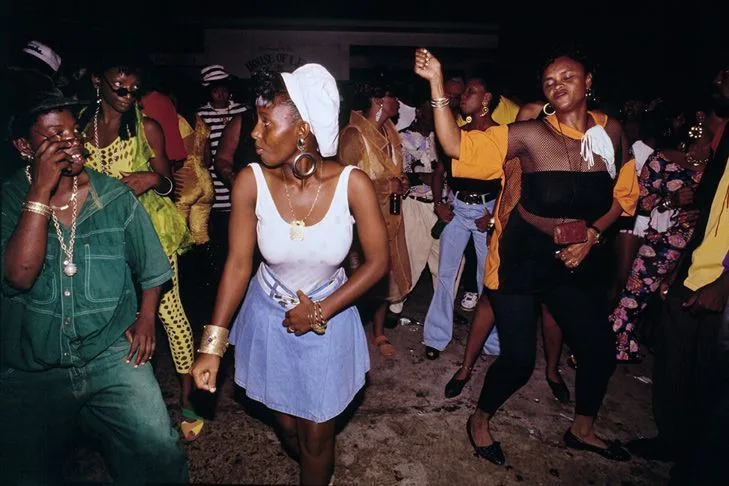
The dancehall dance floor is not only a site of movement. It is also a site of language.
On the dance floor, language becomes:
Through call-and-response, chants, phrases, and lyrical interaction, the dance floor becomes a space where language is experienced collectively.
This reinforces the idea that dancehall language is not only written or recorded. It is social and performative.
It lives in interaction.
Language, Memory, and Cultural Preservation
Dancehall language is an important part of cultural memory.
It preserves:
Through lyrics, recordings, and oral transmission, language helps carry the history of dancehall forward.
This is why documenting dancehall language is essential.
Without preservation, linguistic traditions can be:
The work of institutions like Dancehall Museum and The Reggae Institute is therefore critical in ensuring that dancehall language is studied, respected, and preserved.
Why Dancehall Language Belongs in the Museum
Language is not always the first thing people think of when they think about museums.
But it should be.
Dancehall language belongs in the museum because it is:
It is as important as:
Because language shapes how all of these are understood.
To preserve dancehall language is to preserve one of the most powerful tools through which the culture expresses itself.
Conclusion: Language as Cultural Power
Dancehall speaks in a language that is rhythmic, expressive, inventive, and deeply rooted in Jamaican experience.
It is a language of:
Through Patois, flow, slang, and vocal style, dancehall has created one of the most dynamic linguistic traditions in modern culture.
Its words carry rhythm. Its phrases carry history. Its voice carries power.
Dancehall language is not just how the culture speaks.
It is how the culture defines itself.
Research Credit
Published by Dancehall Museum
The History of Dancehall Queens & the Legacy of Carlene Smith
The History of Dancehall Queens & the Legacy of Carlene Smith Reggae Museum | Reggae Fashion Museum Permanent Cultural Archive Introduction: Dancehall as Cultural Runway Dancehall is not merely a music genre. It is a living cultural institution — a performance space, a fashion runway, and a site of social expression rooted in Jamaica’s post-independence…
Read More The History of Dancehall Queens & the Legacy of Carlene SmithContinue
The Complete History of Dancehall: From Kingston’s Dance Floors to a Global Cultural Force
A Dancehall Museum Feature Researched by The Reggae Institute Curated by YardRock TV Dancehall is one of the most influential cultural movements to emerge from Jamaica in the modern era.It is at once a music, a social world, a performance tradition, a visual language, a fashion system, a dance vocabulary, and a powerful site…
Read More The Complete History of Dancehall: From Kingston’s Dance Floors to a Global Cultural ForceContinue
Shabba Ranks and the Global Dancehall Image
Shabba Ranks and the Global Dancehall Image A Dancehall Museum Journal Feature Researched by The Reggae Institute Curated by YardRock TV Few artists have shaped the global image of dancehall as powerfully as Shabba Ranks. Before dancehall became a familiar visual and sonic language in international music culture, Shabba Ranks helped carry its image onto…
Read More Shabba Ranks and the Global Dancehall ImageContinue
From Kingston to the World: How Dancehall Influenced Global Fashion, Music, and Culture
From Kingston to the World: How Dancehall Influenced Global Fashion, Music, and Culture A Dancehall Museum Journal Feature Researched by The Reggae Institute Curated by YardRock TV Dancehall is one of Jamaica’s most powerful cultural exports. Born in the sound systems, dance spaces, neighborhoods, and nightlife of Kingston, dancehall evolved from a local expression of…
Read More From Kingston to the World: How Dancehall Influenced Global Fashion, Music, and CultureContinue
How Jamaican Culture Shaped New York, the Entertainment Industry, and the World
How Jamaican Culture Shaped New York, the Entertainment Industry, and the World By Dancehall Museum Roots That Cross Oceans: Jamaica’s Cultural Powerhouse From the streets of Kingston to the boroughs of New York City, Jamaican culture has left an unforgettable mark on global music, fashion, language, and lifestyle. What began with ska, rocksteady, reggae,…
Read More How Jamaican Culture Shaped New York, the Entertainment Industry, and the WorldContinue
Sound System Culture in Jamaica: The Foundation of Dancehall
A Dancehall Museum Feature Researched by The Reggae Institute Curated by YardRock TV To understand dancehall, one must first understand the sound system. Before dancehall became a globally recognized musical and cultural force, it was built in the towering speaker stacks, selector booths, open-air dances, crowded yards, and neighborhood sessions of Jamaica. It was in…
Read More Sound System Culture in Jamaica: The Foundation of DancehallContinue
Related articles
Continue reading