2026-04-03
Super Cat: Cool Authority, Style, and the Architecture of Dancehall Swagger
Super Cat: Cool Authority, Style, and the Architecture of Dancehall Swagger
Curated by YardRock TV · Researched by The Reggae Institute
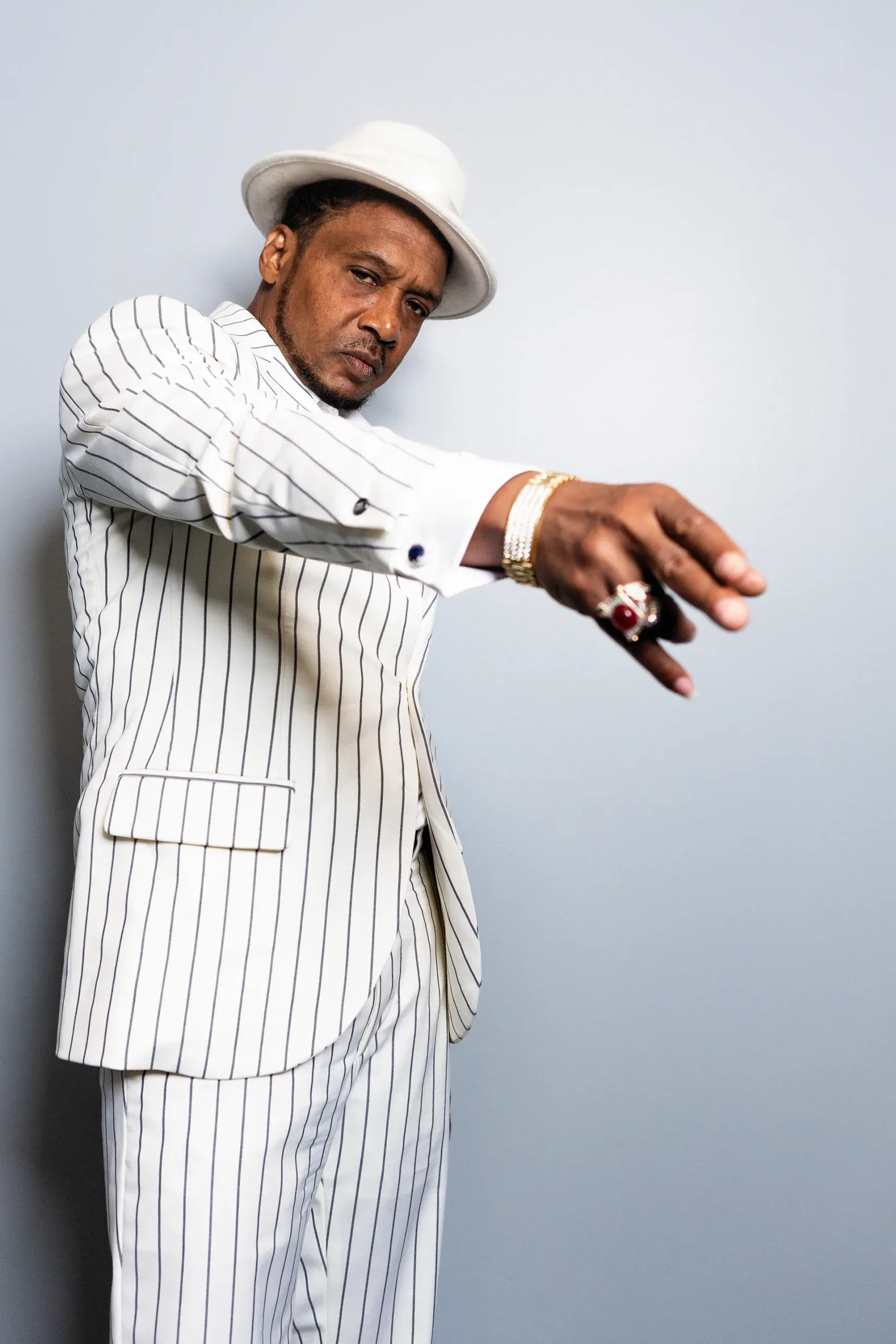
Photo: Martei Korley
Super Cat: Cool Authority, Style, and the Architecture of Dancehall Swagger
A Dancehall Museum Journal Feature
In the visual history of dancehall, few figures embody the power of understated style as completely as Super Cat.
Where some artists commanded attention through spectacle, excess, or theatrical performance, Super Cat operated differently. His presence was built on something quieter, but no less powerful:
control, confidence, and effortless cool
He did not need to overwhelm the space. He owned it.
Super Cat helped define one of the most influential visual languages in dancehall culture — a style rooted in restraint, precision, and social authority. His image demonstrated that in dancehall, power does not always come from being the loudest.
Sometimes, it comes from being the most composed.
The Emergence of Cool in Dancehall Image Culture
By the late 1980s and early 1990s, dancehall had already developed a rich visual culture shaped by:
Within this environment, multiple styles of visibility coexisted:
Super Cat introduced — and perfected — another dimension:
cool authority
His image suggested that power could be communicated through:
This was not the absence of style. It was style distilled.
Style Without Excess
Super Cat’s fashion did not rely on overstatement.
Instead, it reflected a highly controlled approach to visual identity, often grounded in:
His style communicated something essential:
nothing was forced
This is one of the defining features of true cool.
The clothes did not appear to wear him. He wore them with ease.
This distinction is critical in dancehall fashion.
Because in a culture where visibility is constant and competition is intense, the ability to appear effortless becomes one of the highest forms of visual mastery.
The Power of Presence
Super Cat’s image cannot be understood through clothing alone.
His true influence lies in how he carried himself.
His presence was marked by:
This created a unique kind of visual tension.
Where other performers might fill space with movement, Super Cat allowed space to exist — and then occupied it with certainty.
This is one of the most sophisticated forms of performance.
It transforms the artist from entertainer into figure of command.
Dancehall Masculinity and the Language of Cool
Super Cat played a major role in shaping a particular form of dancehall masculinity — one rooted in:
This version of masculinity differs from louder or more aggressive performance styles.
It is not based on proving dominance through excess.
It is based on being unquestioned.
This matters because dancehall masculinity is not monolithic.
It includes multiple expressions, including:
His image helped expand the visual vocabulary of what dancehall masculinity could be.
Street Elegance and Cultural Precision
One of the most important aspects of Super Cat’s style is the balance between:
streetwear and elegance
He demonstrated that street-based fashion could carry:
This is a key contribution to dancehall style history.
Because it shows that elegance does not always come from formalwear or luxury fashion.
It can emerge from:
Super Cat’s image reflects a deep understanding of this principle.
His style was never accidental.
It was disciplined without appearing rigid.
Performance as Controlled Energy
On stage, Super Cat brought the same visual philosophy.
His performances were not built on constant motion or spectacle.
They were built on:
This created a different kind of engagement.
Instead of overwhelming the audience, he drew them in.
Instead of performing constantly, he allowed moments to breathe.
This approach aligns with a deeper principle in dancehall performance:
true control is knowing when not to move
This is part of what made Super Cat such a compelling figure.
His performances felt grounded, deliberate, and self-assured.
Influence Across Dancehall and Beyond
The visual language established by Super Cat continues to influence:
His approach helped define a model in which:
These ideas have traveled far beyond Jamaica.
They now exist as part of a broader global understanding of style and performance.
The Architecture of Swagger
Swagger in dancehall is often discussed, but rarely analyzed with precision.
Super Cat’s contribution lies in showing that swagger is not only about:
It is about structure.
His swagger was built through:
This is why it can be described as an architecture.
It is constructed, not accidental.
And once constructed, it becomes immediately recognizable.
Why Super Cat Belongs in the Museum
Super Cat belongs in the museum not only because of his music, but because of his role in shaping the visual and performative language of dancehall.
His image helps document:
To preserve his image is to preserve a key dimension of dancehall culture that is often overlooked:
the power of subtlety
This is essential to understanding the full range of dancehall style.
Conclusion: Cool as Cultural Power
Super Cat did not need excess to be iconic.
He demonstrated that style could be quiet and still dominate the room. That presence could be calm and still command attention. That fashion could be simple and still unforgettable.
His legacy reminds us that dancehall is not only a culture of volume and energy.
It is also a culture of:
Super Cat did not just represent dancehall cool.
He helped define its structure.
Research Credit
Published by Dancehall Museum
Dancehall Origins: From Kingston Jamaica to the World
Dancehall Origins: From Kingston to the World A Dancehall Museum Journal Feature Researched by The Reggae Institute Curated by YardRock TV Dancehall is one of the most influential cultural movements to emerge from Jamaica in the modern era. What began in the dance spaces, sound systems, neighborhoods, and social life of Kingston would evolve into…
Read More Dancehall Origins: From Kingston Jamaica to the WorldContinue
The Complete History of Dancehall: From Kingston’s Dance Floors to a Global Cultural Force
A Dancehall Museum Feature Researched by The Reggae Institute Curated by YardRock TV Dancehall is one of the most influential cultural movements to emerge from Jamaica in the modern era.It is at once a music, a social world, a performance tradition, a visual language, a fashion system, a dance vocabulary, and a powerful site…
Read More The Complete History of Dancehall: From Kingston’s Dance Floors to a Global Cultural ForceContinue
Sound System Culture in Jamaica: The Foundation of Dancehall
A Dancehall Museum Feature Researched by The Reggae Institute Curated by YardRock TV To understand dancehall, one must first understand the sound system. Before dancehall became a globally recognized musical and cultural force, it was built in the towering speaker stacks, selector booths, open-air dances, crowded yards, and neighborhood sessions of Jamaica. It was in…
Read More Sound System Culture in Jamaica: The Foundation of DancehallContinue
Shabba Ranks and the Global Dancehall Image
Shabba Ranks and the Global Dancehall Image A Dancehall Museum Journal Feature Researched by The Reggae Institute Curated by YardRock TV Few artists have shaped the global image of dancehall as powerfully as Shabba Ranks. Before dancehall became a familiar visual and sonic language in international music culture, Shabba Ranks helped carry its image onto…
Read More Shabba Ranks and the Global Dancehall ImageContinue
Dancehall Dancers & Fashion Icons – Bogle, Latonya Style, and the Legacy of Style in Motion
Dancehall, born in the inner-city streets of Kingston, Jamaica, is more than a musical genre — it’s a culture. From music to language, to fashion and especially dance, it’s a living, breathing form of expression that has shaped global popular culture. At the heart of this movement are the dancers — trendsetters, stylists, and…
Read More Dancehall Dancers & Fashion Icons – Bogle, Latonya Style, and the Legacy of Style in MotionContinue
From the Archive: The Visual Language of Dancehall Flyers
From the Archive: The Visual Language of Dancehall Flyers A Dancehall Museum Archive Feature Researched by The Reggae Institute Curated by YardRock TV Long before social media posts, event pages, or digital campaigns, dancehall moved through paper, walls, corners, lampposts, handbills, and street circulation. Among the most important visual records of dancehall culture are its…
Read More From the Archive: The Visual Language of Dancehall FlyersContinue

Related articles

Continue reading