2026-04-02
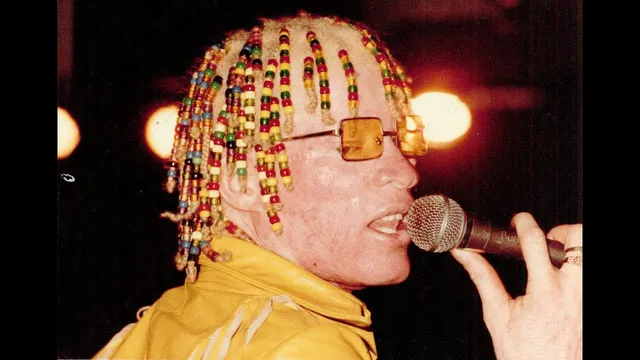
Shabba Ranks and the Global Dancehall Image
Few artists have shaped the global image of dancehall as powerfully as Shabba Ranks.
Curated by YardRock TV · Researched by The Reggae Institute
A Dancehall Museum Journal Feature
Few artists have shaped the global image of dancehall as powerfully as Shabba Ranks.
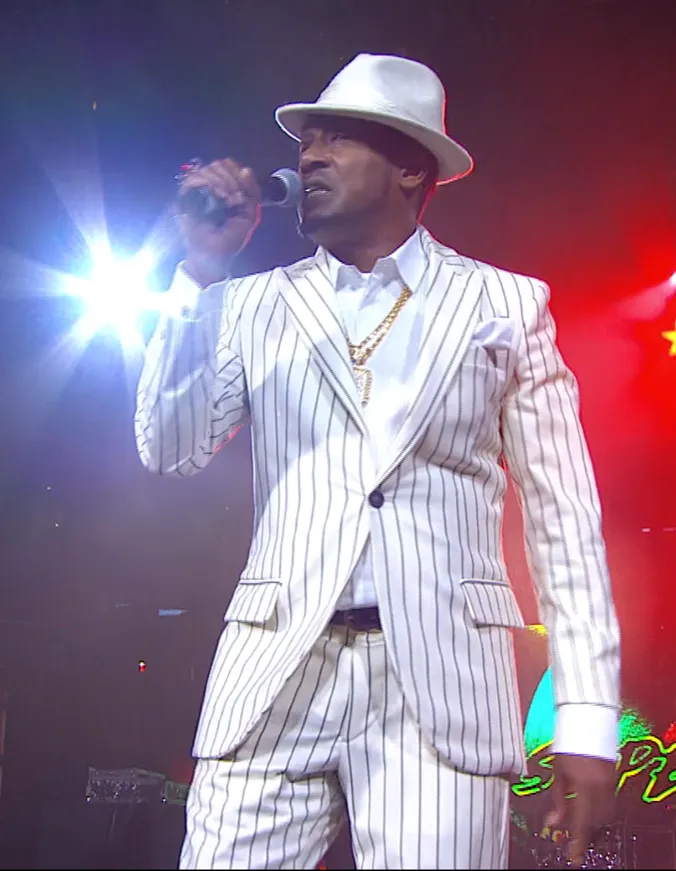
Before dancehall became a familiar visual and sonic language in international music culture, Shabba Ranks helped carry its image onto the global stage with extraordinary force. He was not only one of the most recognizable voices of the genre — he was one of its most defining visual figures.
In the late 1980s and especially the early 1990s, Shabba Ranks emerged as a commanding public presence whose style, posture, grooming, performance, and attitude helped establish a new kind of dancehall stardom. He embodied a version of Jamaican masculinity that was unmistakably rooted in dancehall culture while also legible to a global audience.
His importance lies not only in his music, but in the way he helped define what dancehall looked like when it entered the international imagination.
Shabba Ranks did not merely represent dancehall abroad. He helped author its global image.
The Rise of a New Dancehall Stardom
By the end of the 1980s, dancehall had already become a major force in Jamaican music and nightlife. But the question of how the culture would appear on the global stage — how it would be seen as much as heard — was still being formed.
This is where Shabba Ranks became pivotal.
He arrived at a moment when dancehall was expanding beyond Jamaica through:
And he arrived with something essential:
an instantly recognizable image
Shabba Ranks was not visually accidental. His presence communicated:
He helped show the world that a dancehall artist could occupy global space with the same visual force as any major pop, rap, or R&B star.
This mattered deeply for the culture.
Image as Authority
One of the reasons Shabba Ranks remains so important is that he understood something fundamental about dancehall:
image is part of power
In dancehall, artists are not simply judged by their voice. They are also judged by their presence.
That includes:
Shabba Ranks mastered this.
His image often carried a deliberate visual grammar built around:
He did not need excessive movement to dominate visual space. Often, he simply needed to stand there.
That is a rare kind of star power.
Style, Masculinity, and the Dancehall Body
Shabba Ranks played a major role in shaping how masculinity was visually performed in dancehall at a moment when the culture was becoming increasingly visible outside Jamaica.
His image offered a distinct dancehall articulation of masculine style — one rooted not in understatement, but in presence.
This style language included:
This is important because dancehall masculinity has often been misunderstood by outside observers who fail to read its relationship to:
Shabba Ranks helped crystallize a version of dancehall masculinity that was both local and global — deeply Jamaican in its codes, but expansive enough to travel internationally.
In this way, his image belongs to a broader history of Black masculine style, where clothing, stance, and adornment are inseparable from social meaning.
The Visual Language of Stage Presence
Shabba Ranks was not only stylish in still images. He was powerful in motion.
His stage presence remains one of the most important parts of his image legacy.
He performed with a visual intensity shaped by:
This is crucial because dancehall performance has always been about more than music. It is also about the visual relationship between artist and crowd.
A great dancehall performer does not merely deliver lyrics. He creates a field of social energy.
Shabba Ranks excelled at this.
He knew how to make the audience feel that his presence itself carried weight. His style worked not only because of the garments he wore, but because of how he inhabited them.
This is why his fashion and his performance cannot be separated.
Shabba Ranks and the Era of Global Crossover
The early 1990s were a critical moment in the international visibility of dancehall, and Shabba Ranks stood at the center of that shift.
He became one of the most visible Jamaican deejays to cross into the wider U.S. and international music market, helping push dancehall into new spaces of recognition. Industry retrospectives and music reporting consistently identify the early ’90s signings and breakthroughs of artists like Shabba Ranks as a key turning point in dancehall’s visibility within hip-hop, R&B, and mainstream music markets.
This mattered for more than commercial reasons.
It changed the visual politics of the genre.
Once dancehall began appearing more frequently in:
the question of how dancehall would be represented visually became even more important.
Shabba Ranks became one of the primary answers to that question.
He represented dancehall not as novelty, but as authority.
A Major Label Era and the Expansion of Dancehall Image
The significance of Shabba Ranks’s rise also lies in the way he entered a major-label era of visibility without losing the core visual logic of dancehall.
This is not a small achievement.
Artists who cross into global visibility often undergo visual flattening — their image is made safer, less specific, less rooted. Shabba Ranks, by contrast, carried a dancehall-coded image into broader music culture while still feeling distinctly of the culture.
That meant the world was not simply seeing “a reggae artist” in a vague sense.
It was seeing:
This gave dancehall visibility on its own terms — or at least closer to them than many artists before him had managed.
That is one of the reasons his image legacy remains so significant.
Shabba Ranks and the GRAMMY Era of Dancehall Recognition
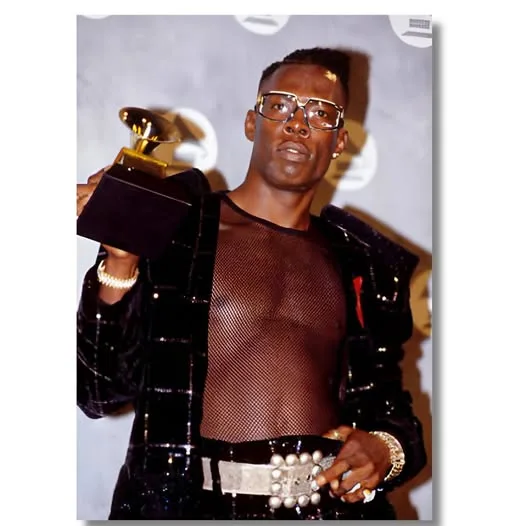
Shabba Ranks also occupies a major place in the institutional history of dancehall recognition.
He won consecutive GRAMMY Awards in 1992 and 1993, a milestone repeatedly referenced in Recording Academy coverage as a turning point for the recognition of Jamaican deejays in the international awards landscape.
That achievement matters because awards culture is also image culture.
Recognition at that level helped circulate a particular visual understanding of dancehall to broader publics. It placed a dancehall artist — with dancehall styling, dancehall performance logic, and dancehall masculine presence — into spaces of mainstream legitimacy that had not always made room for the genre on its own terms.
Shabba Ranks did not just win awards.
He brought a dancehall-coded visual presence into institutional view.
“Dem Bow” and the Shape of Global Rhythm
No discussion of Shabba Ranks’s global image is complete without acknowledging the cultural reach of “Dem Bow.”
While this article centers image rather than discography, “Dem Bow” matters because it became one of the most globally consequential rhythmic and cultural reference points in modern music. Billboard’s histories of dembow and reggaeton explicitly trace one of the genre’s key lineages through Shabba Ranks’s 1990 recording.
Why does this matter visually?
Because songs that travel globally also carry image with them.
As dancehall rhythms circulated, so too did the visual codes attached to the artists who delivered them. Shabba Ranks was not just exporting sound. He was exporting a public aesthetic.
That included:
This is part of how a local image system becomes global.
Photography, Video, and the Construction of Iconic Presence
Shabba Ranks’s image also matters because it was highly effective in visual media.
He photographed well. He filmed well. He occupied the camera with force.
This is not incidental.
Certain artists become iconic because they are able to translate their presence across multiple media forms:
Shabba Ranks was one of those artists.
His visual identity was strong enough to hold together across all of these spaces. That consistency helped solidify his image as iconic rather than temporary.
He did not simply have good looks or memorable outfits.
He had visual coherence.
That is what turns an artist into an image icon.
The Politics of Respectability and Dancehall Image
Shabba Ranks also occupies an important place in the history of how dancehall was interpreted — and often misinterpreted — by global institutions.
Dancehall has frequently been viewed through outside frameworks that flatten its complexity or misunderstand its visual and social codes. Artists like Shabba Ranks often carried the burden of representing a culture that was both highly influential and often inadequately contextualized.
This matters because his image was never just personal.
It was also symbolic.
He became, for many outside audiences, one of the first major visual reference points for what dancehall was supposed to look like. That gave his image tremendous cultural weight.
To study Shabba Ranks seriously is therefore not only to study a star. It is to study a moment in which dancehall itself was being made visible to the world — and negotiated through the body and image of one artist.
Influence on Later Dancehall and Global Music Image
The legacy of Shabba Ranks’s image can still be seen in how artists think about the relationship between:
He helped establish a model for later artists in dancehall and beyond: that an artist’s public image must feel fully inhabited.
It is not enough to wear the clothes. The clothes must look like they belong to the performer’s inner world.
This is what Shabba Ranks did so effectively.
His influence lives on not only in direct imitation, but in the broader expectation that dancehall artists — and many artists shaped by dancehall — must arrive with a strong, coherent image.
That expectation is now central to global music culture.
Why Shabba Ranks Belongs in the Museum
Shabba Ranks belongs in the museum not only because of his recordings, but because of his role in shaping the visual history of dancehall.
His image helps document:
To preserve his image is to preserve a key chapter in the history of:
This is not peripheral material. It is central to how dancehall entered world culture.
Conclusion: The Face of Global Dancehall
Shabba Ranks did more than make records.
He gave dancehall a face the world could not ignore.
Through style, posture, confidence, stage command, and visual clarity, he helped define what dancehall looked like when it stepped into global visibility. He carried the culture outward not as imitation, but as force.
That is why his legacy matters.
Not only because he was heard everywhere. But because he was seen everywhere.
Shabba Ranks was not simply one of dancehall’s biggest stars.
He was one of the artists who helped make dancehall globally visible.
Research Credit
Published by Dancehall Museum
The History of Dancehall Queens & the Legacy of Carlene Smith
The History of Dancehall Queens & the Legacy of Carlene Smith Reggae Museum | Reggae Fashion Museum Permanent Cultural Archive Introduction: Dancehall as Cultural Runway Dancehall is not merely a music genre. It is a living cultural institution — a performance space, a fashion runway, and a site of social expression rooted in Jamaica’s post-independence…
Read More The History of Dancehall Queens & the Legacy of Carlene SmithContinue
Sound System Culture in Jamaica: The Foundation of Dancehall
A Dancehall Museum Feature Researched by The Reggae Institute Curated by YardRock TV To understand dancehall, one must first understand the sound system. Before dancehall became a globally recognized musical and cultural force, it was built in the towering speaker stacks, selector booths, open-air dances, crowded yards, and neighborhood sessions of Jamaica. It was in…
Read More Sound System Culture in Jamaica: The Foundation of DancehallContinue
Dancehall Origins: From Kingston Jamaica to the World
Dancehall Origins: From Kingston to the World A Dancehall Museum Journal Feature Researched by The Reggae Institute Curated by YardRock TV Dancehall is one of the most influential cultural movements to emerge from Jamaica in the modern era. What began in the dance spaces, sound systems, neighborhoods, and social life of Kingston would evolve into…
Read More Dancehall Origins: From Kingston Jamaica to the WorldContinue
The Complete History of Dancehall: From Kingston’s Dance Floors to a Global Cultural Force
A Dancehall Museum Feature Researched by The Reggae Institute Curated by YardRock TV Dancehall is one of the most influential cultural movements to emerge from Jamaica in the modern era.It is at once a music, a social world, a performance tradition, a visual language, a fashion system, a dance vocabulary, and a powerful site…
Read More The Complete History of Dancehall: From Kingston’s Dance Floors to a Global Cultural ForceContinue
Dancehall Queens: Style, Power, and Cultural Influence
Dancehall Queens: Style, Power, and Cultural Influence Photography Alex Welsh A Dancehall Museum Journal Feature Researched by The Reggae Institute Curated by YardRock TV The figure of the dancehall queen is one of the most visually powerful and culturally significant presences in Jamaican popular culture. She is not simply a style icon, nor merely a…
Read More Dancehall Queens: Style, Power, and Cultural InfluenceContinue
Yellowman: The Legendary Voice Who Helped Define Dancehall
Yellowman: The Legendary Voice Who Helped Define Dancehall A Dancehall Museum Journal Feature Researched by The Reggae Institute Curated by YardRock TV Few figures in the history of dancehall are as important, recognizable, or culturally foundational as Yellowman. To speak of Yellowman is to speak of one of the defining architects of early dancehall…
Read More Yellowman: The Legendary Voice Who Helped Define DancehallContinue
Related articles
Continue reading