Dancehall 101 · Lesson 2 of 9
Deejay Performance
The art of toasting — talking, chanting, and performing live over a riddim.
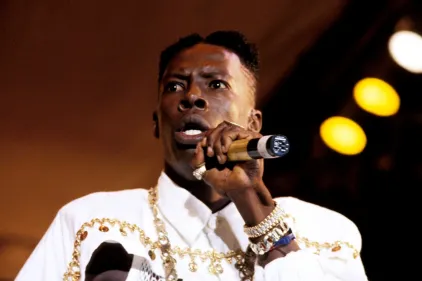
In Jamaican sound system culture, a "deejay" is not the person playing records (that's the selector) — it's the performer who talks, chants, or sings over the music in real time, a practice known as toasting. Toasting grew out of sound system MCs hyping the crowd between records in the 1950s and '60s, and pioneers like Count Machuki, King Stitt, and U-Roy transformed those ad-libbed shout-outs into a structured vocal art form with its own rhythm, wordplay, and delivery style.
By the 1970s, deejays like Big Youth and I-Roy were toasting entire songs rather than just introducing them, laying the groundwork for what would become dancehall's central performance mode: an artist chatting lyrics — often improvised, always rhythmically locked to the riddim — rather than singing a fixed melody. This is the direct ancestor of rapping, and Jamaican sound system culture is widely credited as one of hip-hop's foundational influences.
As dancehall emerged in the late 1970s and 1980s, deejaying became the genre's dominant vocal style, with artists like Yellowman, Josey Wales, and later Shabba Ranks and Ninjaman building entire careers on lyrical dexterity, crowd command, and the ability to freestyle over a riddim. Deejay performance remains dancehall's core discipline — a tradition of live, rhythmic, spontaneous vocal artistry that rewards wit as much as delivery.
Go deeper in the Journal
Related artists
Angie Angel
Jamaican female deejay (toaster) active from the late 1980s onward, best known for her platinum UK jungle remix of "Agony" and for blending a hard-edged dancehall delivery with Rastafari-influenced conscious lyrics.
Bob Marley
The defining figure of reggae music and a global icon of Rastafari culture, Pan-Africanism, and social-justice songwriting, best known as frontman of Bob Marley and the Wailers.
Buju Banton
One of dancehall and reggae's most influential deejays, whose 1995 album "'Til Shiloh" is widely credited with helping steer 1990s dancehall toward a more conscious, Rastafari-rooted sound; a Grammy winner whose career has also been marked by the internationally condemned song "Boom Bye Bye" and a 2011 US drug-trafficking conviction.
Capleton
Jamaican reggae/dancehall deejay known as "The Fireman," "King Shango," and "The Prophet" — a leading figure, alongside Buju Banton and Sizzla, in dancehall's 1990s turn back toward Rastafari-rooted, socially conscious lyrics.
Next lesson