2026-08-13
The Role of Producers and Engineers in the Digital Era
When the band left the studio, the producer and the engineer became the band — and dancehall's creative center of gravity shifted to the mixing desk.
Curated by YardRock TV · Researched by The Reggae Institute
Before the digital era, a Jamaican record producer's job was largely one of curation and direction — booking the studio, assembling the house band, guiding the arrangement, and signing off on the final mix. The digital shift of the mid-1980s changed the job description entirely. When drum machines and synthesizers replaced the live band, the producer and the engineer stopped directing the music and started building it, note by note, from the ground up.
From Director to Builder
King Jammy is the clearest example of this shift. Having apprenticed under King Tubby — the engineer credited with inventing dub by isolating and manipulating multitrack tapes — Jammy carried that same hands-on, technical sensibility into the digital age. After "Sleng Teng," he became less a traditional producer and more a one-man riddim factory, programming rhythms himself and voicing dozens of artists over the same digital foundations.
A new generation of producer-engineers followed the same model: Bobby Digital (Dave Kelly's contemporary and King Jammy's former engineer, who took the digital ethos as his own name), Steely & Clevie (a keyboard-and-drum programming duo who became one of the most prolific riddim-building partnerships of the late 1980s and 1990s), and later Dave Kelly himself, whose Madhouse label riddims defined much of 1990s dancehall.
The Engineer as Author
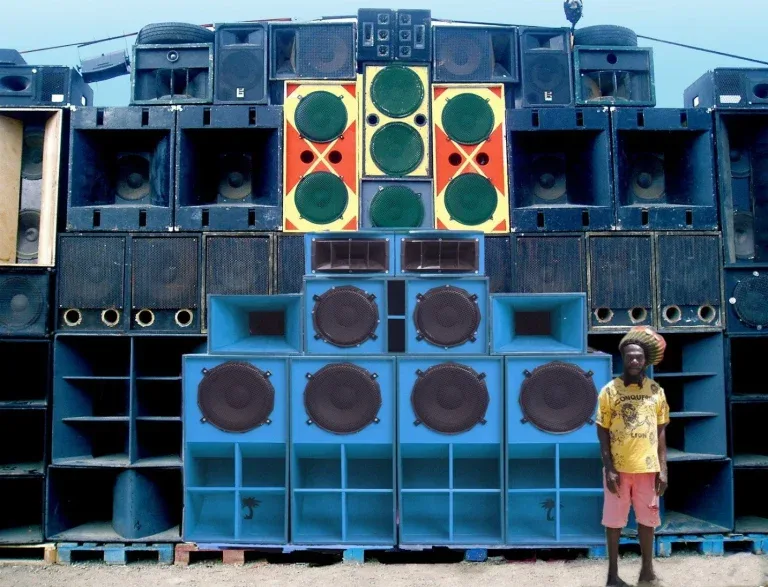
In the analog era, the engineer's job was largely to capture a performance as faithfully as possible. In the digital era, the engineer's choices — which drum sound, which bass patch, how tightly the pattern was quantized, how the mix was equalized for maximum impact on a sound system's speaker stack — became authorial decisions in their own right. A riddim's identity now lived as much in its programming and mix as in any melody.
This gave rise to a production culture where a single riddim, built by a single producer-engineer, could carry a dozen or more different vocal performances from a dozen different artists — each one a distinct single, all sharing the same instrumental DNA. The producer's name on a riddim became a genre signal in itself, much the way a director's name signals a certain sensibility in film.
A New Center of Gravity
This restructured dancehall's entire creative economy. Where reggae's golden era had concentrated influence in a handful of studios with the best house bands, the digital era distributed that influence across anyone with a rhythm box, a synthesizer, and an ear for what would move a dancehall crowd. It also elevated the producer-engineer to a level of visibility and credit that had rarely existed before — figures like King Jammy, Bobby Digital, and Steely & Clevie became as central to dancehall's identity as any deejay voicing over their work.
Related articles
Continue reading