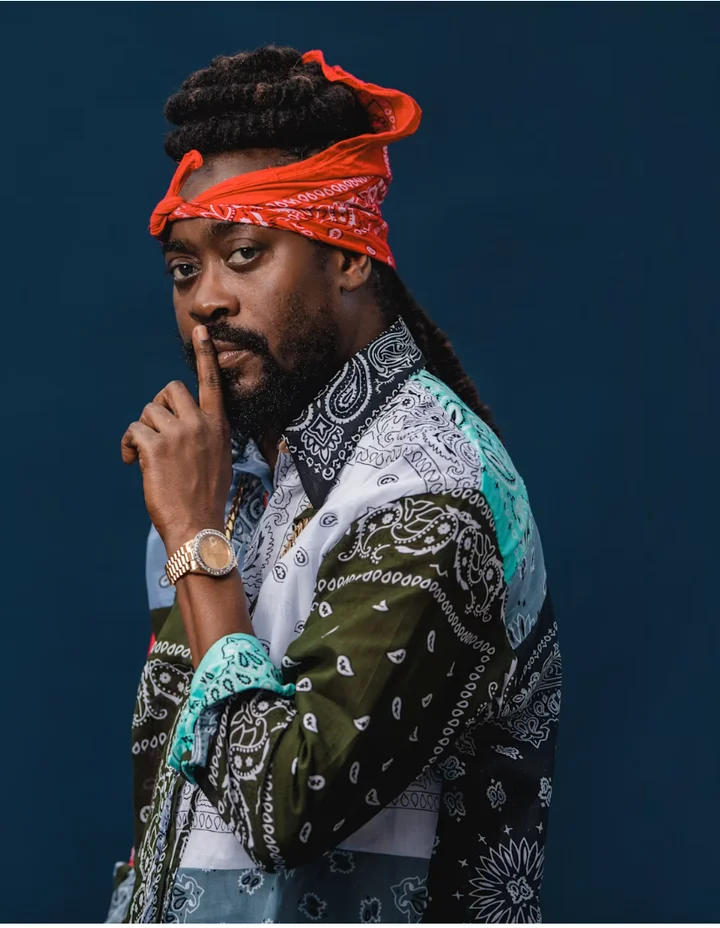
Beenie Man
Pioneers & 90s Icons
known for
Self-proclaimed 'King of the Dancehall,' one of the genre's most commercially successful and enduring global ambassadors across a career spanning more than four decades.
record
- Birth name
- Moses Anthony Davis
- Born
- August 22, 1973, Waterhouse, Kingston, Jamaica
Full biography
Moses Anthony Davis was born on August 22, 1973, in the Waterhouse district of Kingston, Jamaica, a neighborhood that produced several major reggae and dancehall talents. He began performing as a child, toasting on the mic from around age five, encouraged by his uncle Sydney Knowles, a drummer who had played with Jimmy Cliff. His talent was evident early: he won the Tastee Talent Contest in 1981, and Kingston radio DJ Barry G introduced the young performer to local sound-system operators, helping establish his reputation as a prodigy who came to be billed as 'the Ten Year Old DJ Wonder.'
Davis released his debut single 'Too Fancy' in 1981 with producer Henry 'Junjo' Lawes and his first album, The Invincible Beenie Man: The Ten Year Old DJ Wonder, in 1983, but stepped back from full-time recording to finish school before re-emerging as a serious force in the early 1990s. His breakthrough came in 1993 with 'Matie,' Jamaica's first number-one single of that style, which helped him win the DJ of the Year award — the first of eight consecutive years he claimed the title. He signed with Island/Shocking Vibes and built a run of hits through the mid-1990s that established him as one of the island's dominant dancehall voices.
His 1997 single 'Who Am I (Sim Simma)' became an international crossover hit and went gold, opening the door to major U.S. recognition. His 2000 album Art and Life, featuring Wyclef Jean, Mya, and Redman, won the Grammy Award for Best Reggae Album in 2001, and he later scored further crossover success with 'Feel It Boy' alongside Janet Jackson in 2002. His long, celebrated rivalry-turned-friendship with Bounty Killer culminated in a widely streamed Verzuz battle in May 2020. His influence has continued to be recognized in recent years: in 2024 he received the Grammy's Dr. Dre Global Impact Award, and in June 2025 his debut album was inducted into the Grammy Hall of Fame.
Beenie Man's career has also been marked by significant controversy over anti-gay lyrics in songs such as 'Damn' (2000) and 'Weh Yuh No Fi Do' (2004), which contained lines calling for violence against gay people. Along with Bounty Killer, Elephant Man, and Buju Banton, he became a central target of the 'Stop Murder Music' campaign launched in 2004 by LGBT rights groups including UK-based OutRage! and Jamaica's J-FLAG; the pressure led MTV to cancel a planned Miami concert and police to shut down a London show. He issued an apology in August 2004 that activists called insufficient, and a fuller video apology to Jamaica's gay community in 2012, though he later made contradictory statements claiming he had 'never apologized.' He also faced a 2008 tax evasion case (of which he was cleared) and a January 2021 charge for breaching Jamaica's pandemic-era gathering and noise restrictions, and lost his U.S. visa for years (rescinded in 2015) before it was restored in December 2024, allowing him to resume American touring. Widely regarded as one of dancehall's most versatile and durable stars, he remains active in music, continuing to release new material such as 2024's Nuff Lyrics album and 2025's Most Wanted Riddim EP.
More from Pioneers & 90s Icons
Admiral Bailey
A dancehall deejay who was among the biggest stars of the late 1980s, best known for the controversial hit "Punaany."
Assassin (Agent Sasco)
Dancehall deejay performing as both Assassin and Agent Sasco, celebrated for lyrical sharpness and social commentary, and for high-profile hip-hop collaborations with Kanye West and Kendrick Lamar.
Baby Wayne
Dancehall artist known for conscientious, anti-crime lyrics unusual for the era, and his 1991 hit "Mama" produced by Steely & Clevie.
Next in the archive