2026-04-01
The Complete History of Dancehall: From Kingston’s Dance Floors to a Global Cultural Force
Dancehall is one of the most influential cultural movements to emerge from Jamaica in the modern era. It is at once a music, a social world, a performance tradition, a visual language, a fashion system, a dance vocabulary, and a powerful site of Black cultural innovation.
Curated by YardRock TV · Researched by The Reggae Institute
Dancehall is one of the most influential cultural movements to emerge from Jamaica in the modern era. It is at once a music, a social world, a performance tradition, a visual language, a fashion system, a dance vocabulary, and a powerful site of Black cultural innovation.
Born in the sound systems, open-air sessions, dance spaces, and neighborhoods of Kingston, dancehall evolved from a physical place into a fully developed cultural force — one that would transform music production, nightlife, street fashion, deejay performance, dance, and global popular culture. Kingston, recognized by UNESCO as a Creative City of Music, is officially noted as the birthplace of six musical genres, including dancehall, underscoring the city’s foundational role in the culture’s development.
Today, dancehall can be heard in reggaeton, hip-hop, Afrobeats, UK bass music, Caribbean club culture, and global pop. It can be seen in fashion, dance trends, beauty culture, visual aesthetics, and the language of performance itself. But to understand dancehall fully, one must begin not with the charts, but with the dancehall — the physical and social space from which the culture took its name.
Before Dancehall Was a Genre, It Was a Space
Long before “dancehall” was recognized internationally as a musical style, the word referred to a place: the halls, lawns, yards, and open-air venues where people gathered to hear music, socialize, dance, and perform community. Jamaican cultural histories and music writing consistently note that the term “dancehall” was in use as early as the late 1950s, describing the social spaces where sound systems played imported R&B and locally made Jamaican music.
These dance spaces were not secondary to the music. They were the engine of the culture.
In Kingston and across Jamaica, the dancehall functioned as:
To enter the dancehall was to enter a cultural world governed by sound, style, presence, and energy.
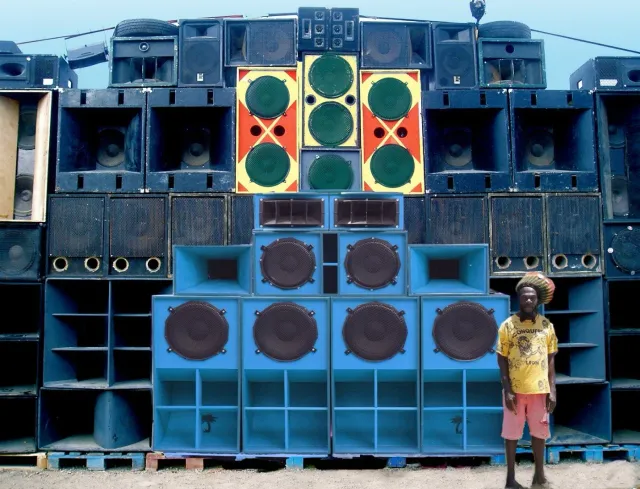
This early ecosystem was built around the sound system, one of Jamaica’s most significant cultural inventions.
The Sound System: The Foundation of Dancehall
To tell the history of dancehall is to tell the history of sound system culture.
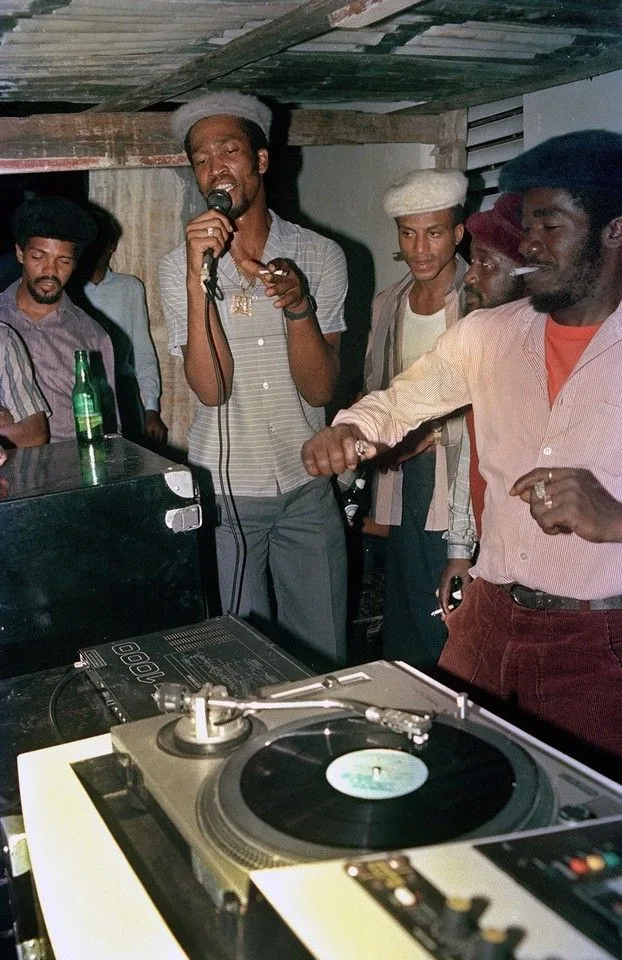
From the 1950s onward, Jamaican sound systems transformed music into a public, mobile, communal experience. Crews assembled powerful speaker stacks, amplifiers, turntables, selectors, and deejays to create sonic environments that rivaled — and often surpassed — formal venues. Sound systems were technological, social, and artistic institutions. They created audiences, shaped taste, and built local celebrity long before artists became global stars.
Sound system culture laid the foundation for nearly every core element of dancehall:
The sound system did not simply play the music. It made the culture legible.
Dancehall’s relationship to bass, repetition, live response, and audience command emerges directly from this sound system tradition. Kingston’s continuing reputation as a center of music production and sound system culture remains central to how Jamaica is represented in global music heritage today.
Roots in Reggae, But Not the Same Thing
Dancehall emerged from reggae, but it is not simply reggae renamed.
Reggae laid much of the sonic and cultural groundwork: bass-forward arrangements, rhythm-centered production, socially grounded lyrics, and the sound system as delivery system. Yet by the late 1970s and early 1980s, a new cultural energy was taking shape — harder, leaner, more street-centered, more immediate, and more closely tied to the social life of the dance itself.
This shift was not accidental. It reflected changing realities in Jamaica:
Dancehall was more direct, more local in tone, more rhythm-driven in its delivery, and more intensely tied to the performance space. Where roots reggae often addressed nation, spirit, and collective struggle through band-oriented arrangements, dancehall increasingly emphasized the deejay, the riddim, the session, the style, and the immediate social world of the dance.
This was not a decline from reggae. It was a new cultural language.
The Late 1970s to Early 1980s: The Emergence of Modern Dancehall
By the late 1970s, the foundations of what would become modern dancehall were clearly visible.
This era saw the rise of:
The dancehall of this period was not yet fully “digital,” but it had already established the core DNA of the genre:
the deejay over the riddim
the dance as proving ground
the sound system as authority
the crowd as co-creator
The culture was no longer simply about recorded songs. It was about who could command the dance.
This distinction matters. Dancehall is not just a recording tradition — it is a performance ecology.
The Deejay as Central Figure
One of dancehall’s most significant transformations was the elevation of the deejay as a central creative force.
In Jamaican music, the deejay is not simply a “DJ” in the American sense. The deejay is a vocal performer, a rhythmic speaker, an MC, a lyrical architect, and a live strategist. Dancehall helped push this role into full cultural prominence.
The deejay’s power in dancehall rests on several things:
This shift changed popular music globally. What would later become central to rap, MC culture, hype performance, and club-commanding vocal style was already deeply embedded in Jamaican dancehall and sound system traditions.
Dancehall made the voice itself a weapon, a theater, and a form of social power.
1985 and the Digital Revolution
If there is one moment that changed dancehall forever, it is the mid-1980s digital revolution.
A defining milestone in this shift is the rise of digital dancehall through the now-legendary “Sleng Teng” moment — widely associated with King Jammy, Wayne Smith, and the Casio MT-40 keyboard preset, which helped catalyze a new era of computerized riddims. Jamaican music writing and retrospective analysis regularly identify this moment as the spark that jump-started the digital age of Jamaican music.
This was more than a hit record. It was a structural break in the sound of Jamaican music.
The digital era changed dancehall in profound ways:
This new sonic architecture would influence global electronic music, hip-hop production, reggaeton, club music, and bass culture for decades to come.
Digital dancehall did not erase the roots of the culture. It amplified them into a new technological age.
The 1990s: Dancehall Becomes a Global Force
By the 1990s, dancehall was no longer only a Jamaican phenomenon. It had become a global cultural engine.
This era saw dancehall spread through:
Dancehall’s impact in this decade was seismic.
Its influence could be felt in:
This was the period in which dancehall became one of the key cultural bridges between Jamaica and the wider Black Atlantic.
Its rhythmic structures, deejay flows, dance styles, bass emphasis, and fashion codes moved outward rapidly — shaping not only music, but the very aesthetics of nightlife and youth culture.
Dancehall had become portable power.
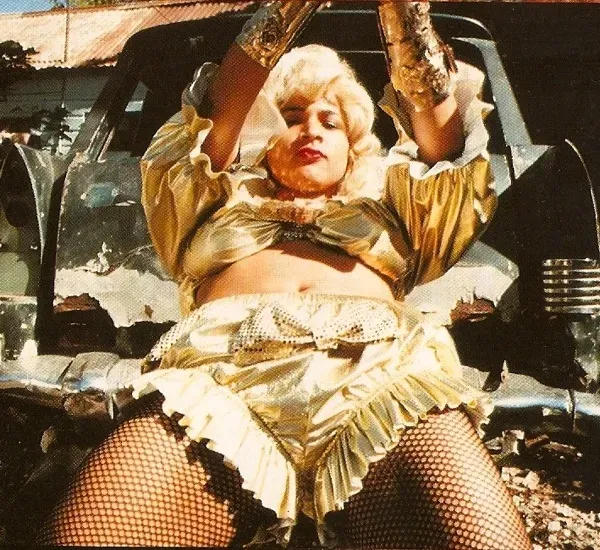
Dancehall Fashion: Style as Performance
No history of dancehall is complete without fashion.
Dancehall is one of the most visually expressive cultural forms in the modern world. It is not simply heard. It is seen.
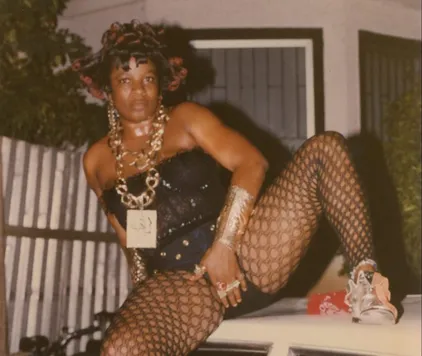
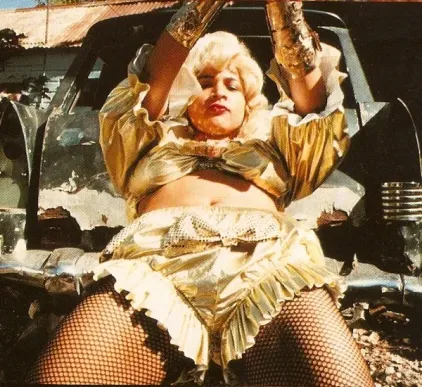
From the beginning, dancehall has been a space where clothing, grooming, jewelry, footwear, hair, and bodily presentation function as cultural language. To “come out” in dancehall is to appear, and appearance has always carried meaning.
Dancehall fashion has historically communicated:
Across different eras, dancehall style has included:
Dancehall style is not a side note to the music. It is one of the culture’s central archives of self-fashioning.
In this way, dancehall belongs not only to music history, but to the history of Black fashion, performance, beauty, and visual identity.
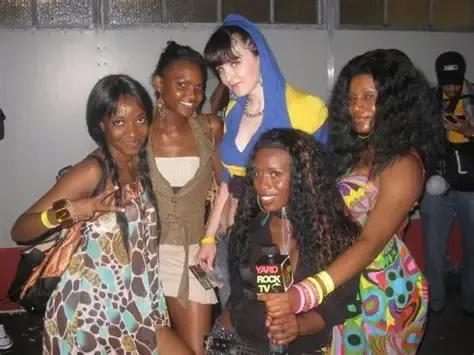
Dancehall Queens and the Politics of Visibility
One of the most significant and under-institutionalized aspects of dancehall history is the role of women — especially in relation to performance, fashion, dance, and public image.
Dancehall queens and female performers helped shape the visual and bodily language of the culture in profound ways. Their presence transformed the dancehall into a site of:
This history is complex and must be treated with seriousness. Dancehall has long been a space where women negotiated power, image, pleasure, control, vulnerability, and performance in public. To reduce this history to stereotype is to misunderstand one of the most dynamic visual and social traditions in modern Black culture.
A top-tier history of dancehall must include women not as footnotes, but as architects of the culture’s image-world.
Dancehall Dance: The Body as Archive
Dancehall is not only vocal and visual. It is kinetic.
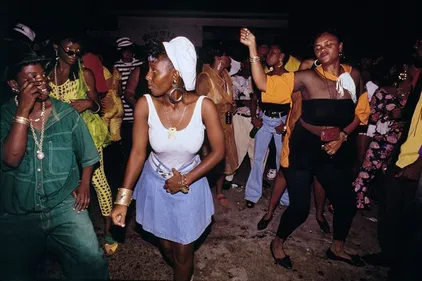
The dance floor has always been one of dancehall’s primary sites of innovation. Moves are created, circulated, named, repeated, adapted, and archived through bodies long before they are formally documented.
Dancehall dance functions as:
Each era of dancehall carries its own movement vocabulary — its own gestures, rhythms, poses, and embodied codes. These dances are not simply entertainment. They are forms of cultural authorship.
To understand dancehall, one must understand the dance floor as an archive of movement knowledge.
Media, VHS, Flyers, and the Visual Circulation of Dancehall
Before social media, dancehall was already a visually networked culture.
It circulated through:
These media forms were crucial to how dancehall traveled, how reputations were built, and how scenes were remembered. Flyers announced dances and clashes. VHS tapes spread movement and style. Photography fixed otherwise fleeting moments of performance and fashion. Print media helped narrate and debate the culture.
These materials are not disposable ephemera. They are primary historical records.
Any serious museum of dancehall must treat them as such.
Dancehall and the World
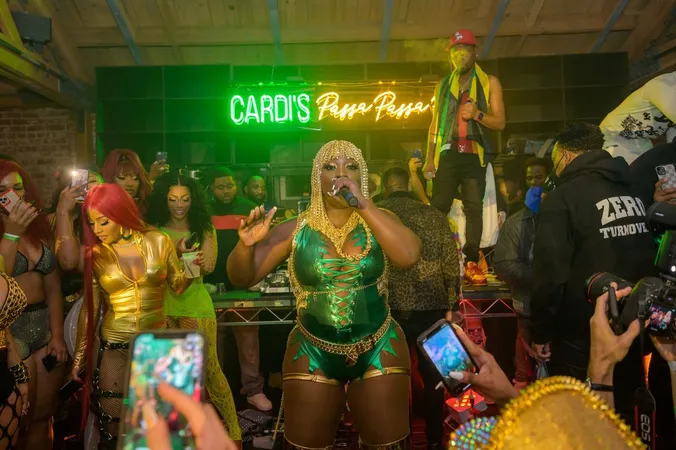
Today, dancehall’s influence is impossible to overstate.
Its fingerprints can be found in:
Even where dancehall is not explicitly named, its cultural logic often remains present:
This is why dancehall must be treated not as a niche genre, but as a major global cultural system.
UNESCO’s recognition of Jamaica’s musical heritage and Kingston’s official cultural designation reinforce the wider international understanding that Jamaica’s music traditions — including dancehall — are foundational to world culture. UNESCO’s heritage materials on Jamaican music also explicitly recognize the way Jamaican forms have influenced other cultural traditions globally.
Why Dancehall Must Be Preserved
Despite its enormous influence, much of dancehall’s history remains:
This is precisely why dancehall belongs in the museum.
Dancehall is not too “popular” for institutional recognition. It is too important to be left undocumented.
Its history lives in:
To preserve dancehall is to preserve one of the most important archives of Jamaican modernity, Black creativity, and global cultural transformation.
Conclusion: Dancehall as Living Heritage
Dancehall is not only a genre. It is a living heritage tradition.
It is a culture of bass and brilliance. Of movement and memory. Of style and survival. Of local invention and global transformation.
It was built in the dancehalls of Kingston, tested in the sound systems, amplified by deejays, embodied on dance floors, dressed through fashion, and carried across the world by people, recordings, media, and memory.
Its history is not over. It is still being written.
And that is precisely why it must be studied, preserved, and honored with the seriousness it deserves.
Dancehall is not a side note in cultural history.
It is one of the great cultural movements of the modern world.
Research Credit
Published by Dancehall Museum
From the Archive: The Visual Language of Dancehall Flyers
From the Archive: The Visual Language of Dancehall Flyers A Dancehall Museum Archive Feature Researched by The Reggae Institute Curated by YardRock TV Long before social media posts, event pages, or digital campaigns, dancehall moved through paper, walls, corners, lampposts, handbills, and street circulation. Among the most important visual records of dancehall culture are its…
Read More From the Archive: The Visual Language of Dancehall FlyersContinue
From Kingston to the World: How Dancehall Influenced Global Fashion, Music, and Culture
From Kingston to the World: How Dancehall Influenced Global Fashion, Music, and Culture A Dancehall Museum Journal Feature Researched by The Reggae Institute Curated by YardRock TV Dancehall is one of Jamaica’s most powerful cultural exports. Born in the sound systems, dance spaces, neighborhoods, and nightlife of Kingston, dancehall evolved from a local expression of…
Read More From Kingston to the World: How Dancehall Influenced Global Fashion, Music, and CultureContinue
Dancehall Queens: Style, Power, and Cultural Influence
Dancehall Queens: Style, Power, and Cultural Influence Photography Alex Welsh A Dancehall Museum Journal Feature Researched by The Reggae Institute Curated by YardRock TV The figure of the dancehall queen is one of the most visually powerful and culturally significant presences in Jamaican popular culture. She is not simply a style icon, nor merely a…
Read More Dancehall Queens: Style, Power, and Cultural InfluenceContinue
Dancehall Fashion: The Evolution of Jamaican Style
Bequeathed to Akeem Smith / No Gyal Can Test Archive.Photo Morris (1939-2016), chromogenicprint, 1992. Dancehall Fashion: The Evolution of Jamaican Style A Dancehall Museum Journal Feature Researched by The Reggae Institute Curated by YardRock TV Dancehall fashion is one of the most visually powerful and culturally influential style traditions to emerge from Jamaica. It is…
Read More Dancehall Fashion: The Evolution of Jamaican StyleContinue
The History of Dancehall Queens & the Legacy of Carlene Smith
The History of Dancehall Queens & the Legacy of Carlene Smith Reggae Museum | Reggae Fashion Museum Permanent Cultural Archive Introduction: Dancehall as Cultural Runway Dancehall is not merely a music genre. It is a living cultural institution — a performance space, a fashion runway, and a site of social expression rooted in Jamaica’s post-independence…
Read More The History of Dancehall Queens & the Legacy of Carlene SmithContinue
Dancehall Dancers & Fashion Icons – Bogle, Latonya Style, and the Legacy of Style in Motion
Dancehall, born in the inner-city streets of Kingston, Jamaica, is more than a musical genre — it’s a culture. From music to language, to fashion and especially dance, it’s a living, breathing form of expression that has shaped global popular culture. At the heart of this movement are the dancers — trendsetters, stylists, and…
Read More Dancehall Dancers & Fashion Icons – Bogle, Latonya Style, and the Legacy of Style in MotionContinue
Related articles
Continue reading